That Drone Show Daily: Drones to the Rescue
Saving one life is a Success but, why stop there? We sat down with the folks over at Drones to the Rescue to discuss how drones can save lives, and how you can help them.
The web site to learn more is here.
How your contributions will be used
The time is now & our technology is how
What makes ProSearch EXF UAV different?
We are designing a drone with special equipment that makes it highly qualified to succeed in Search-and-Rescue situations.
Our components:
- FliR cameras: allowing us to see subjects heat source at night making it easier to spot them in at night or in the dark.
- Avalanche Transceivers: picks up the rescue beacon from subject buried under snow.
- GPS Tracker: tracks ProSearch EXF UAV, when person is located another GPS tracker is dropped, latitude and Longitude is sent back to mobile apps and computers.
- 8.8 pound Payload Dropper: Larger payloads delivered saving time on scene
- Extended Flight: Standard flight time 15-18 minutes. ProSearch EXF UAV has extended time of 40 minutes allowing larger search area during rescue missions.
- Ground Station: Allows monitoring the live feed, can be watched live or from recorded footage after every flight in case something was missed.
- Downward Hi-Res Camera: Allow ProSearch EXF UAV to land payloads on target, using on screen display
- ProSearch EXF Modules: On the spot ProSearch EXF UAV quick change modules can be quickly switched out in the field in minutes.
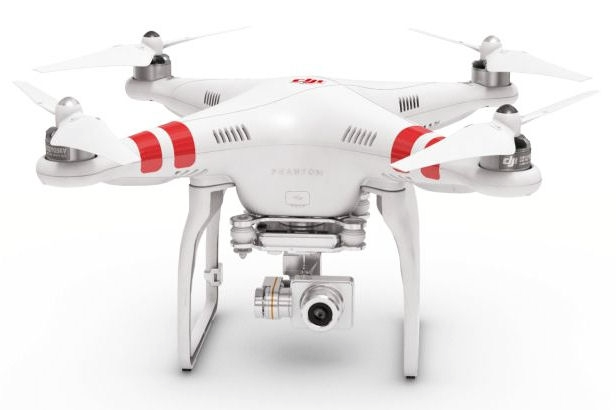
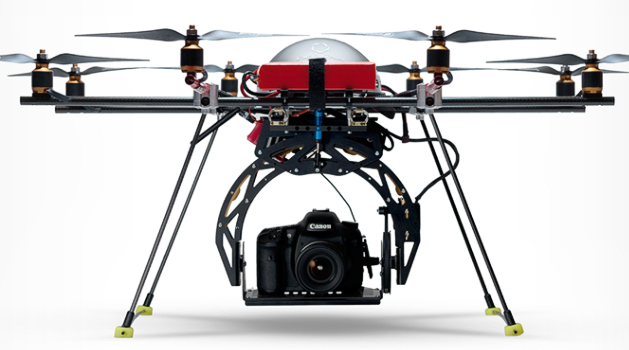
Above are the current options available in UAV’s to SAR teams, one is designed for hobbyist the other is designed for filming crews, both have very limited flight times. (15-18 minutes fitted with light gear.) We are designing something strictly for SAR teams the ” ProSearch EXF UAV” with extended flight times and integrated modules for quick swap out when needed.
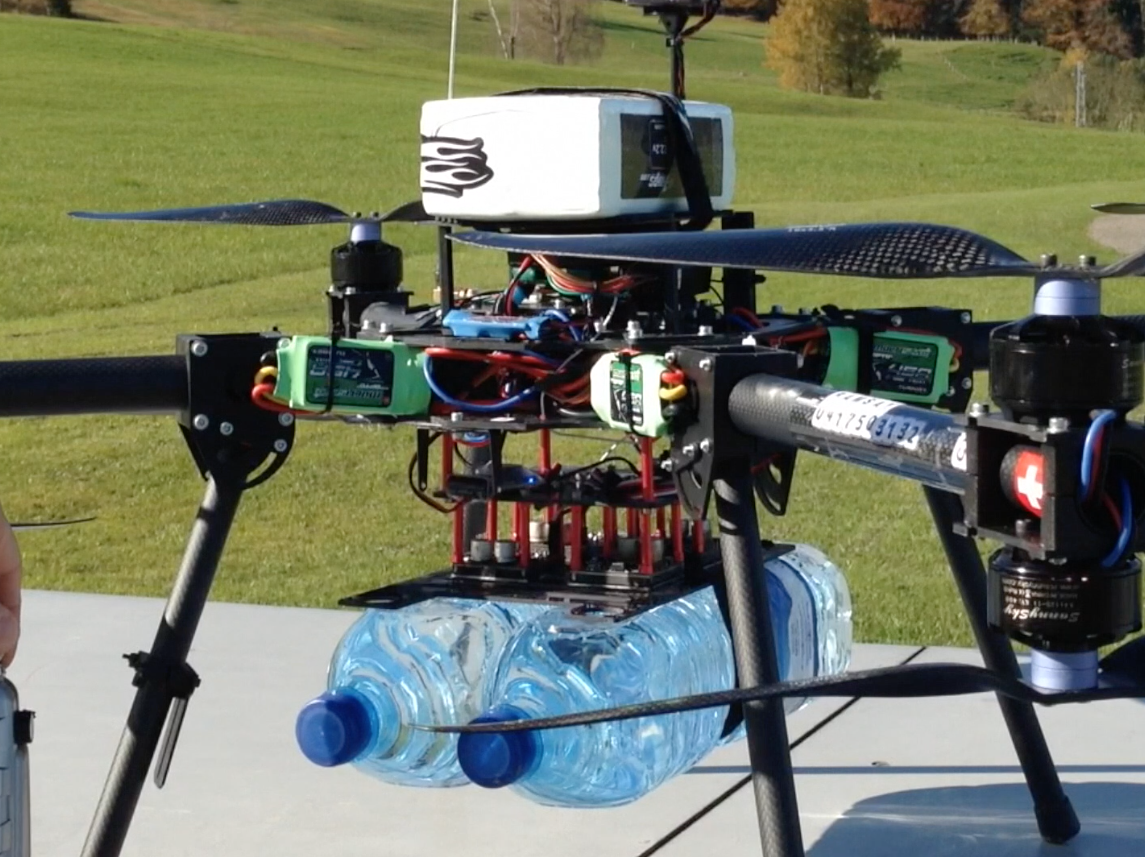
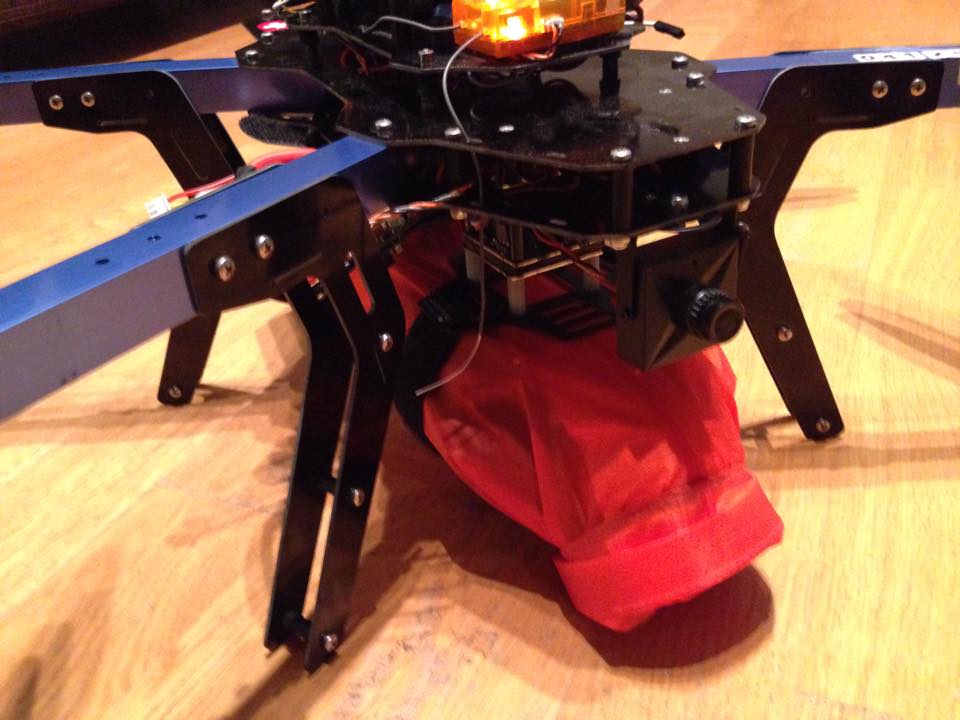
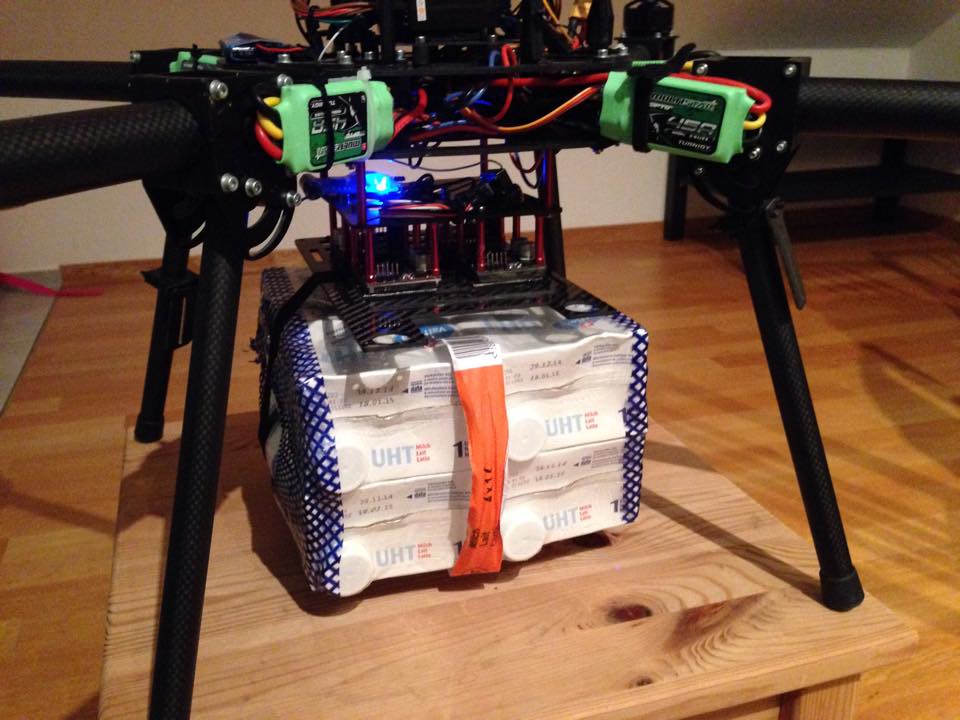
Above is a test platform for testing of the payload dropper. This is our 8.8 pound capacity system we also make a 2.2 pound system for smaller tight places a UAV might be needed. This and a 30-40 minute flight time, is what the three SAR groups we are working with are asking us for.
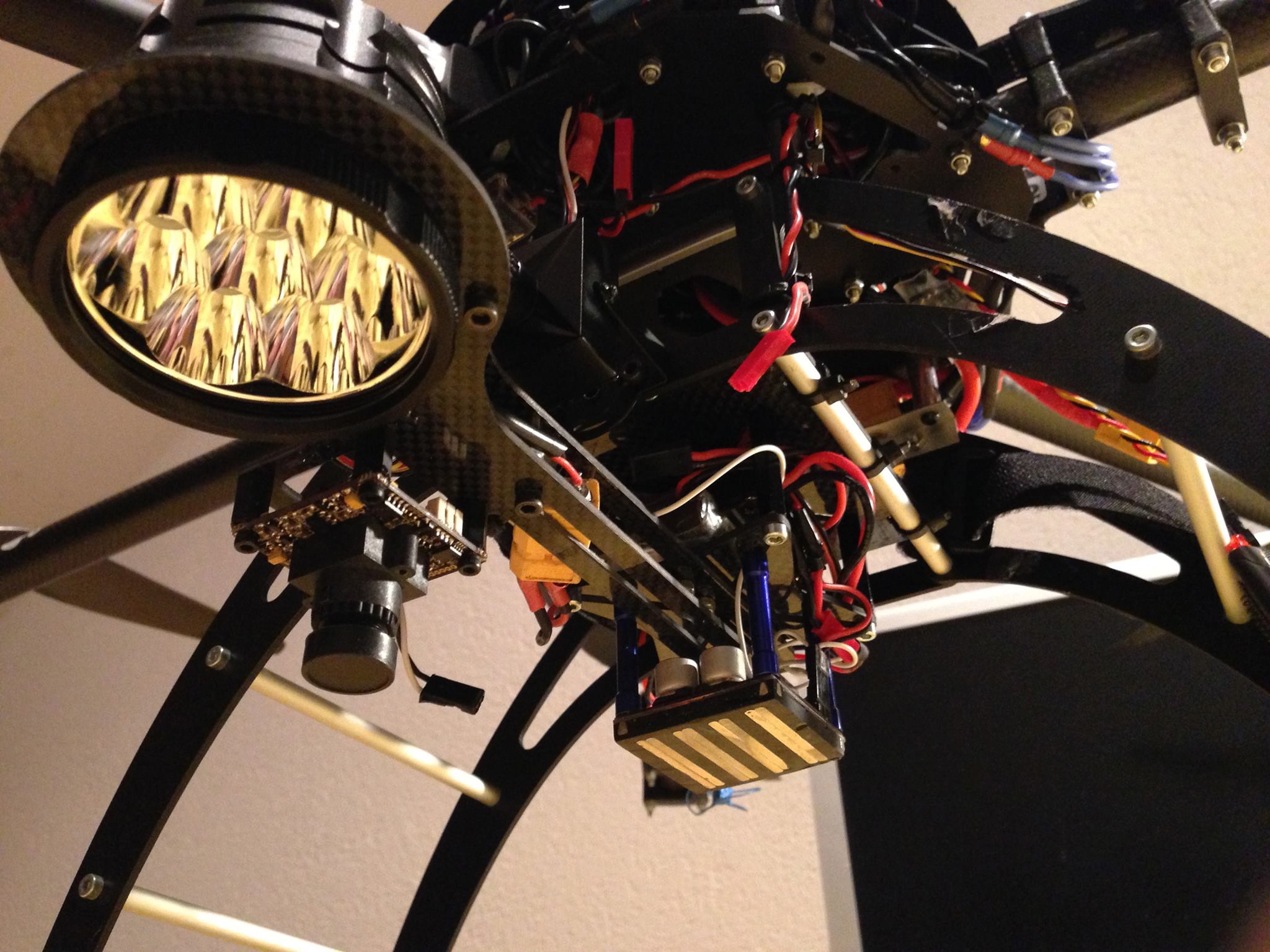
Example: of 2.2 pound system with spot light and Hi-Res Camera (above)
Field Example: Assume a Search-and-Rescue team of 25 people search one square mile. If you space out the searchers with 20 feet between them, this “line” will need to make eleven parallel passes through the area to cover it all and will take a total of 37 hours! That’s 924 MAN HOURS and 37 actual search hours, if the searchers are moving at a slow, deliberate pace as they are trained to do.
Our UAV can scan this one square mile in under 1 hour with one person. This saves 24 people and 35 hours to focus on other efforts to bring home the missing person. Searchers also have recored footage for the teams at base camp to review having double redundancy and more accurate information to go on.
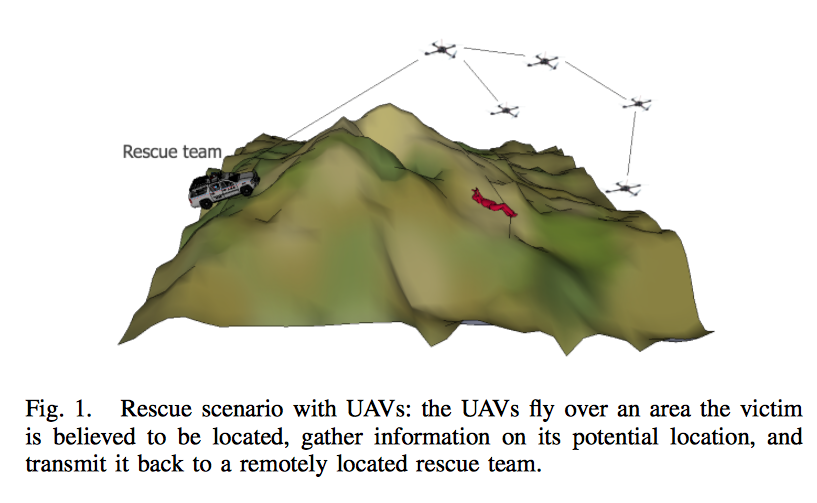
Exclusive Features
Long Flight Times: We are aiming to reach 30-40 minute flight times to ensure that we can get to the victims, no matter where they are.
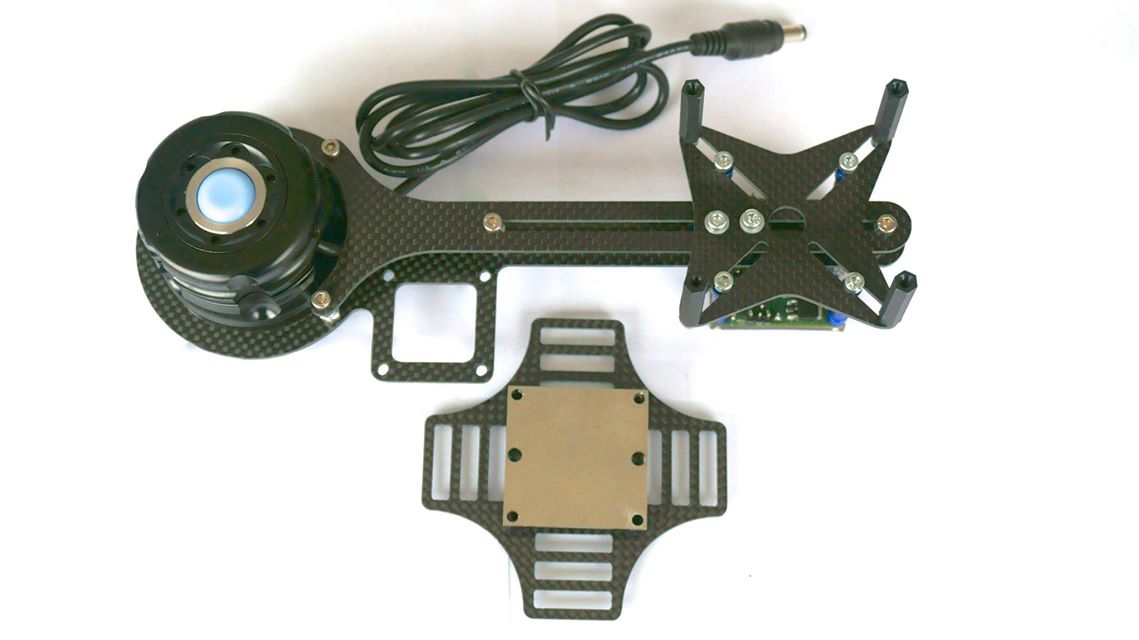
Universal Mounting System: We are working with a manufacturer to design a universal mounting component to change equipment faster with more efficiency. So when the situation changes, searchers can unmount and re-mount the proper equipment, without the need for any tools for the job.
GPS Capabilities: We want the drones to not only be able to cover a lot of ground, but the ability to cover it more efficiently using our GPS capabilities. Our system will drop a tracker to the lost person making them visible on mobile apps and the laptop computers at base. GPS is packaged in a water resistant case, in a flood this could be the difference in life or death. If the victim is swept into the water we could track their movements and plan a course to retrieve them more quickly.
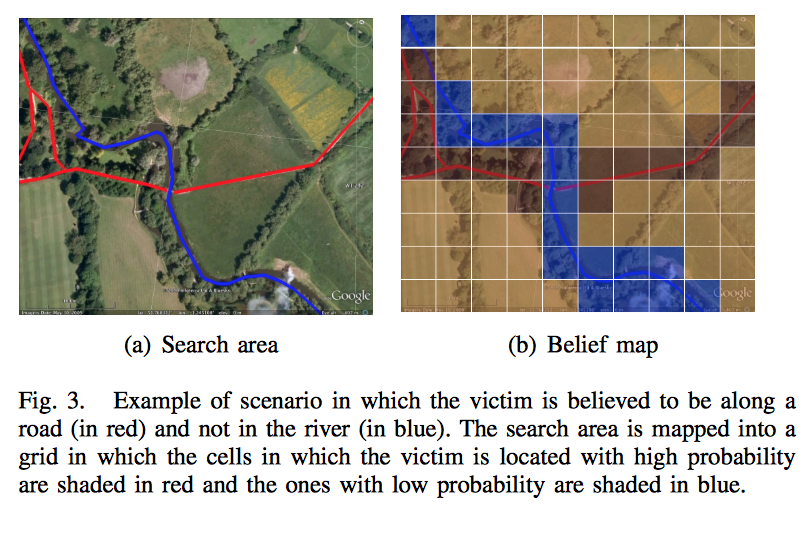 Payload Dropper: We are looking to increase our payload capabilities with a pay load dropper that can carry up to almost 9 pounds. We are also using magnet systems that will not interfere with GPS capabilities. (See Below)
Our SAR Drones in the Real World
No one wants to think about what may be the worst day of their lives or the life of someone they love. But the reality is: crises, natural disasters and missing persons happens every single day and there isn’t a technology that will ever prevent it, however our technology can severely reduce the fatalities involved.
Disasters, accidents and crises happen everyday:
- Every 40 seconds in the United States, a child becomes missing or is abducted.
- An astounding 2,300 Americans are reported missing every day, including both adults and children.
- In 2013, 357 natural triggered disasters were registered, national casualty annual average: 107,000 people, victims: 268 million world wide.
- On average 53% of victims were from floods, 27 % from droughts and 16 % from storms. The country the most affected was China with 36% of victims, worldwide.
- Each year avalanches kill more than 150 people worldwide but a person found within 15 minutes has a 90% chance of survival.
- People often ask: Can’t a helicopter do the same thing? The answer is yes but, at a much higher operating cost. Plus it risk the lives of at least 4 other people, a pilot, co-pilot and two spotters. When our ProSearch EXF UAV can search more cost effectively and save the Helicopter for the actual rescue and pick up.
Our Team
Other Posts you might like about Drones
 That Drone Show Daily Video Podcast 10.25.14
 That Drone Show Daily Video Podcast 10.26.14
 Drone used to rescue window cleaner
 Rescue Drones in Hawaii